
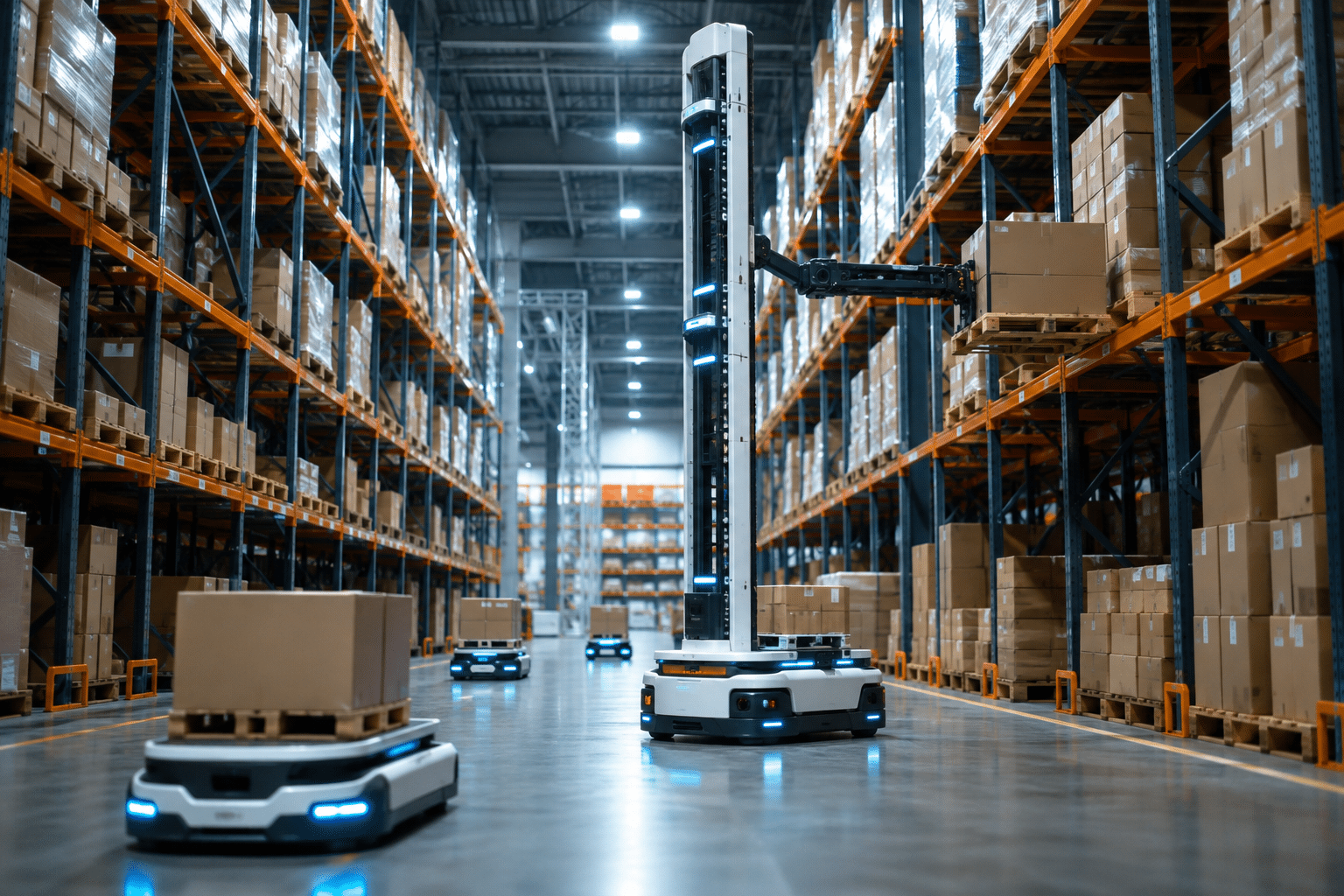
A plain language guide for brokers, owners and their tenants.
More tenants are walking buildings with robots on their roadmap, and a new question is coming up on tours: "Is this building automation ready?" Here is what automated pallet racking systems are, and what a building needs before robots go in.
An automated pallet racking system is storage rack paired with machines that place and retrieve pallets without a forklift driver. Three layers have to work together.
Earlier in this series we covered the robotic automated storage and retrieval system as a whole. This article focuses on the building side.
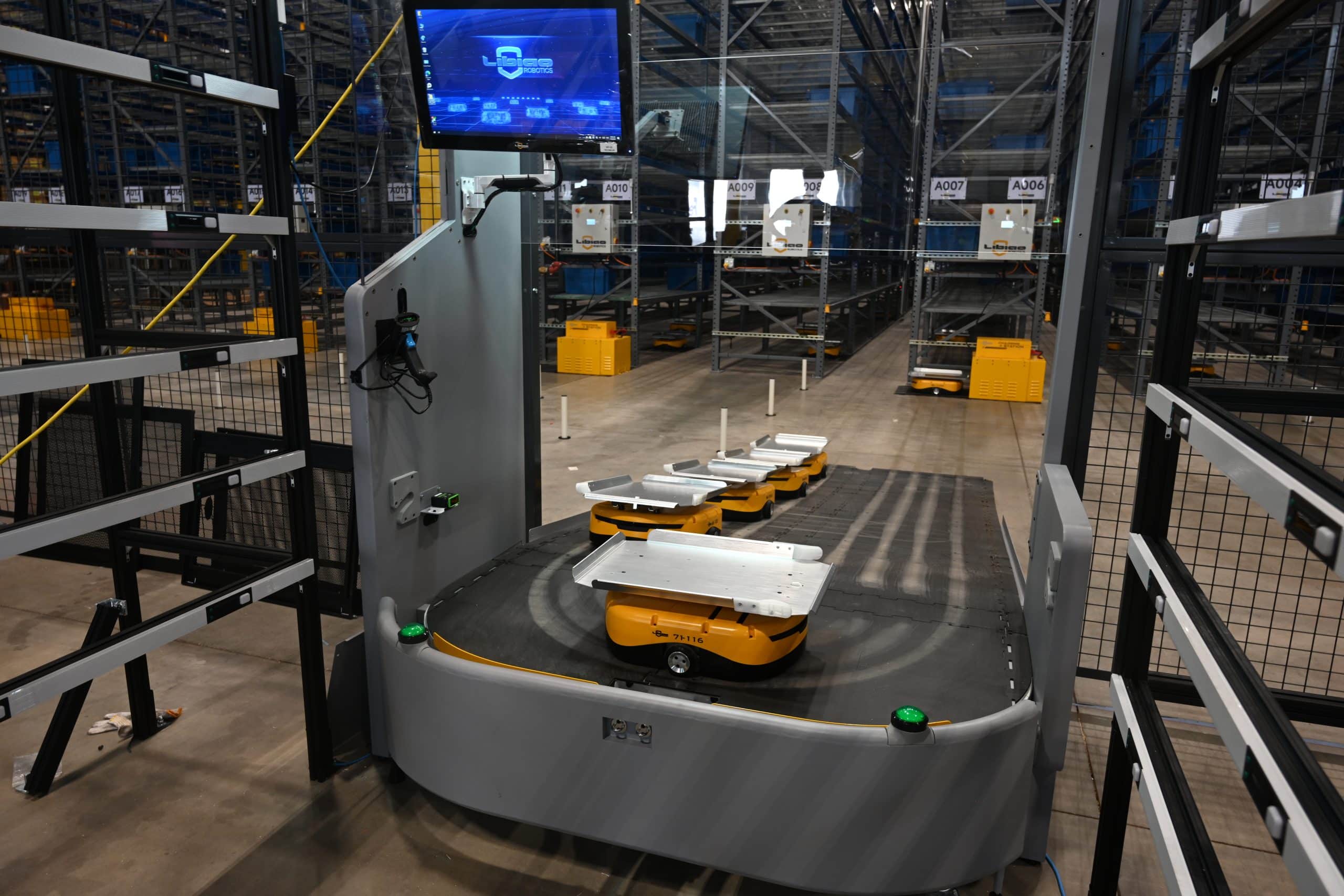
Shuttle carts run inside deep storage lanes, moving pallets without a forklift entering the rack. Read more on pallet shuttle systems.
Rail guided cranes serve narrow aisles in tall, high bay buildings, reaching heights well beyond what a forklift can safely work.
Driverless trucks working conventional or narrow aisle rack, often the easiest first step for an existing operation.
Robotic systems that integrate with existing racking and do not require an ultra flat slab, which shortens the path to automation.
These are the attributes an integrator will ask about first. If you can answer them on a tour, you are ahead of most listings.
Automation can use height people cannot. More clear height means more pallet positions on the same footprint, which often pays for the system.
Many cranes, narrow aisle trucks and guided vehicles need a flat, level floor and a slab rated for concentrated loads.
Wide, regular column grids let aisles run cleanly. Tight or irregular grids cost positions and complicate machine paths.
Dense automated storage often changes the sprinkler design, sometimes adding in rack sprinklers, and goes through high pile review.
Robots need charging stations, dedicated circuits and panel capacity. Utility upgrades can carry long lead times, so ask early.
Reliable wireless coverage down every racked aisle, plus network infrastructure for the management and control software.
Uprights plumb, beams at consistent elevations, bays square end to end. Machines stop where a driver would simply adjust.
Robots add dynamic loads, and high seismic markets like California require heavier anchoring and engineering.
Space for extra aisles, chargers, conveyor, guarding and maintenance access costs little at design and a lot to retrofit.
You do not need to be an engineer to have this conversation. Start with three questions, then match the answers to the checklist. Clear height, slab, power and sprinklers most often decide whether a building works.
Most tenants are not buying robots this year. They want to know the building, and the rack inside it, will not block them later.
We recently laid out racking around a third party robotics system in Grand Prairie, Texas, where the rack design followed the robots. See the Grand Prairie project.
We do not manufacture robots. We build what they run on. SOURCE Racks assesses existing buildings and racking for automation readiness, designs automation ready layouts, handles high pile permits and seismic engineering in house, and installs the rack nationwide. Learn more about our warehouse automation support.
It is storage rack combined with machines, such as shuttles, cranes, autonomous forklifts or robots, and software that store and retrieve pallets without a forklift driver.
Usable clear height, a slab suited to the equipment, regular column spacing, fire protection that can support dense storage, available power, reliable connectivity and room to expand.
Some systems can. Robotic storage that integrates with existing racking and does not require an ultra flat floor can deploy much faster than a full rebuild. Existing rack still needs to be checked for condition and tolerances.
Usually, yes. Dense automated storage is typically high piled storage, and the fire authority will review commodity, height, sprinklers and access. We handle that review in house.
If automation is on the tenant's roadmap, it is usually worth it. Racking engineered to tighter tolerances today can be retrofitted later. Racking that was not built to those tolerances usually has to be replaced.
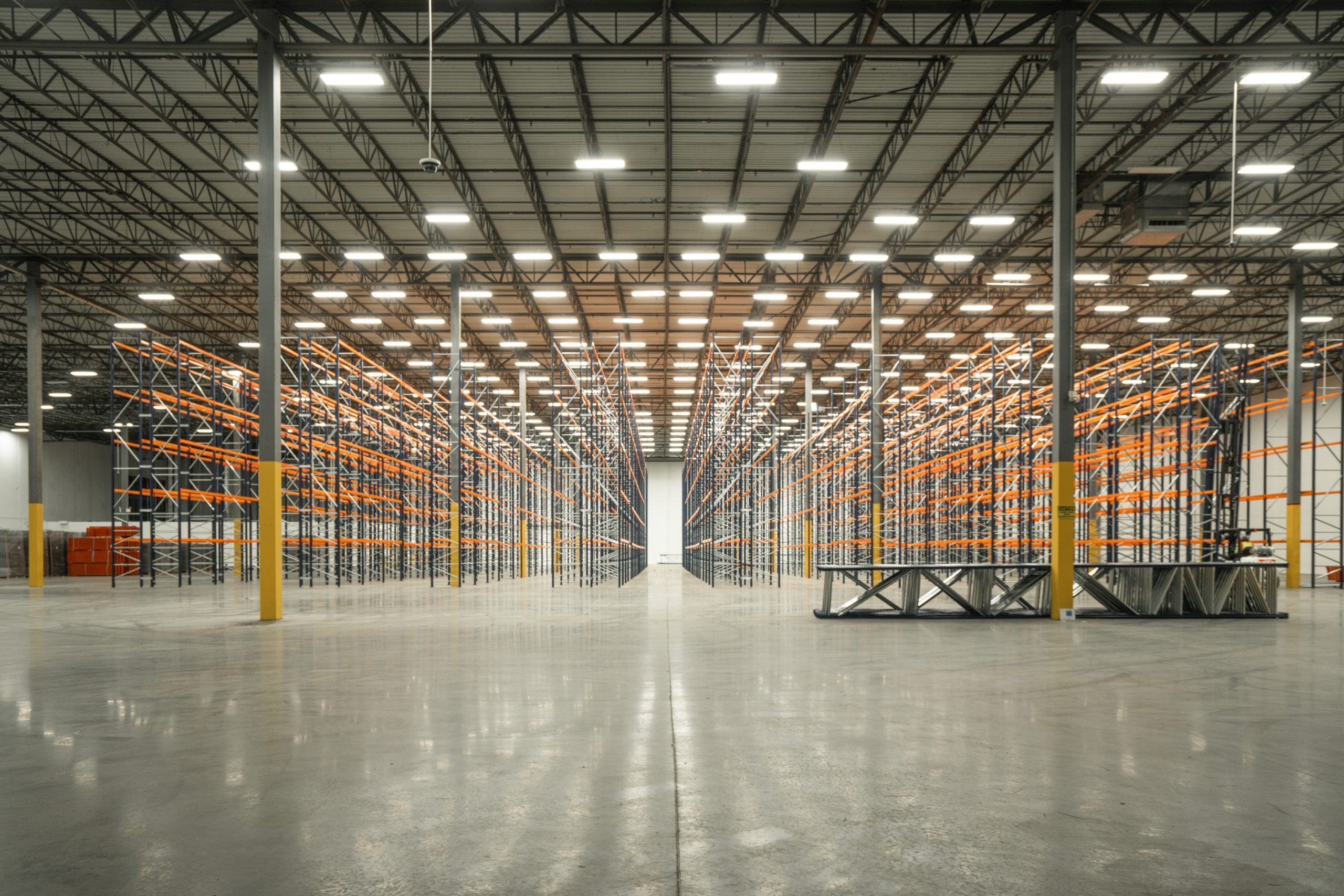
Talk to us before the rack is set. Getting the foundation right is the cheapest part of the project and the most expensive one to redo.