
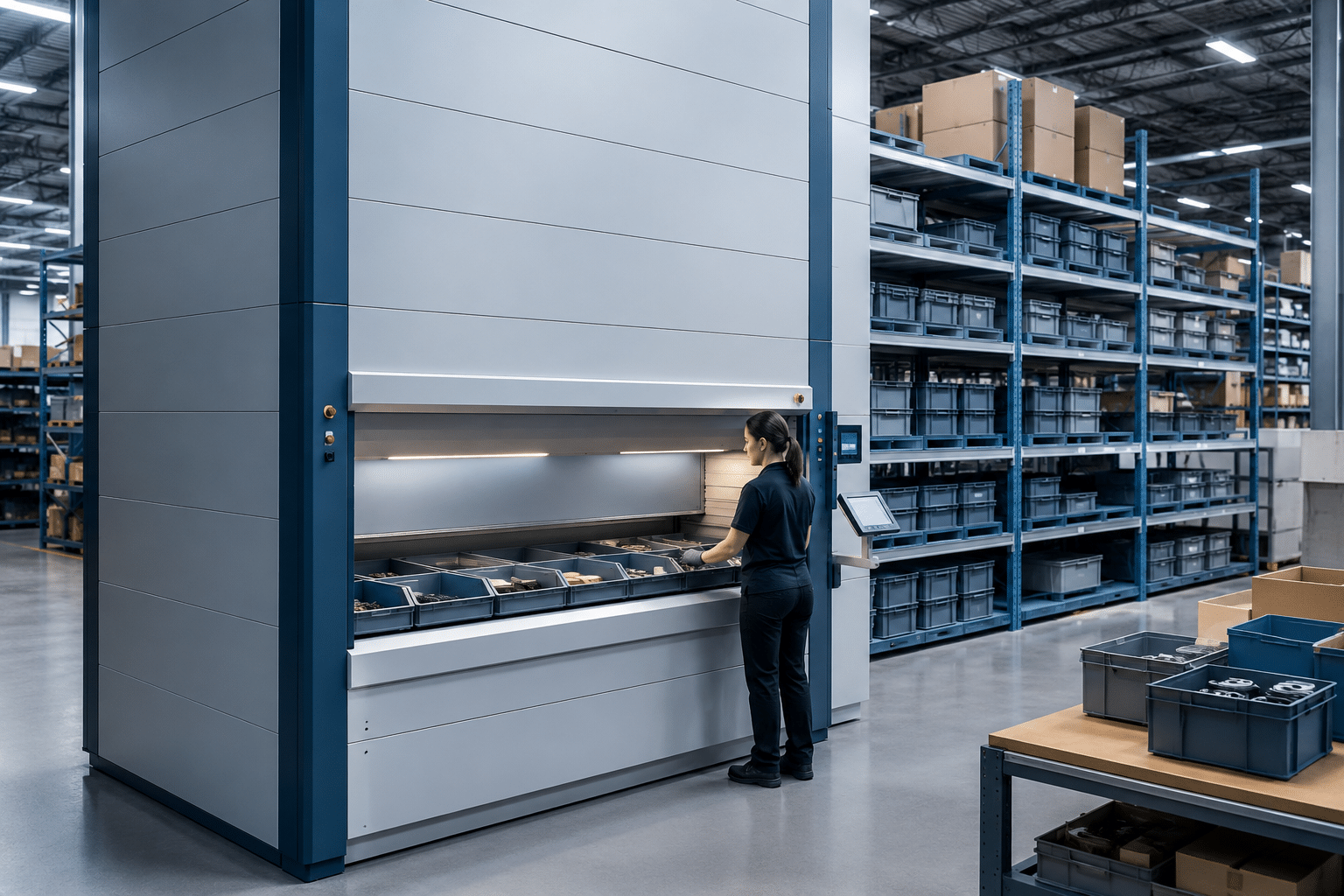
Every warehouse eventually runs out of room on the ground long before it runs out of room in the air. A vertical lift module solves that problem by turning unused overhead room into dense, secure storage. Instead of spreading inventory across long aisles of shelving, a vertical lift module stacks trays inside a single enclosed tower and delivers the right tray to an operator at waist height on demand. The result is a smaller footprint, faster picking, and tighter inventory control across the entire building.
What Is a Vertical Lift Module
A vertical lift module, often shortened to VLM, is an automated storage and retrieval solution built around two columns of trays with a central lifting mechanism between them. When a worker requests an item, the lift module retrieves the correct storage tray and presents it at an ergonomic access point. This goods to person design means operators no longer walk the floor searching for parts. The vertical lift module brings the parts to them, which cuts travel time and reduces picking errors.
Because a lift module encloses inventory inside a steel structure, it also protects sensitive material, spare parts, and high value items from dust, damage, and theft. Many facilities rely on vertical lift modules for parts storage, tooling, and door equipment that needs to stay organized and secure. The same enclosed design keeps a wide range of items clean and traceable across every shift.
How a Vertical Lift Module Saves Floor Space
The biggest draw of any vertical lift module is space savings. A traditional shelving layout wastes the cubic volume above head height, leaving valuable floor space tied up in low racks and wide aisles. A vertical lift module recovers up to 90 percent of that footprint by building storage upward toward the ceiling height of the building. In a facility with tall roofs, that reclaimed vertical space can be enormous.
This kind of space utilization frees warehouse space for production, staging, or new lines. Companies that install a lift module often recover floor space they assumed was gone for good. The taller the building, the greater the space savings, which is why measuring available height is one of the first steps in any storage design. Better space also supports safer material handling equipment lanes on the floor below.
Modula Vertical Lift Modules and Model Options
Modula is one of the most recognized names in vertical storage, and its Modula Lift line anchors a wide range of configurations. The Modula Lift is the flagship vertical lift module, engineered for heavy trays and tall towers. For buildings with limited room, the Modula Slim compresses the same technology into a footprint of about 32 square feet, making it a strong fit where every inch of warehouse space matters. A single Modula VLM can hold thousands of pounds of inventory in a footprint smaller than a parking spot.
At the automated end, the Modula OnePick system uses a robotic gripper to pull items directly from a storage tray without an operator, turning a Modula Lift into a fully autonomous cell. Modula also builds horizontal options, including the Modula horizontal carousel, for high speed fulfillment of uniform items. Dealers such as Southwest Warehouse Solutions distribute and install these Modula vertical lift module systems across many regions.
Vertical Lift Modules Versus Carousels
Buyers often compare vertical lift modules with carousels before choosing a system. Vertical carousels rotate trays on a closed loop like a Ferris wheel, while horizontal carousels spin bins around a track at floor level. Both carousels work well for uniform inventory, but a vertical lift module offers more flexible tray height and better handling of items that vary in size.
A vertical carousel typically has a lower upfront cost, yet a vertical lift module usually delivers stronger long term picking speed and higher storage density. Some facilities combine vertical lift modules with horizontal carousels or even autonomous mobile robots to build a layered automated storage strategy that matches how goods actually move through the warehouse.
Vertical Lift Module Benefits for Warehouse Operations
The vertical lift module benefits reach well beyond raw storage. Faster picking improves operational efficiency and throughput, since operators get quick access to the exact tray they need instead of hunting through aisles. Built in software supports inventory management and connects to labor management systems, giving supervisors real time visibility into stock, productivity, and equipment status.
For efficiency, accuracy, and space, a vertical lift module is one of the most dependable pieces of equipment a modern facility can add. It tightens inventory control, protects parts, and turns wasted vertical space into working storage that keeps the whole warehouse moving. Vertical storage on this scale is how growing companies raise output without leasing another facility.
Get Started With SOURCE Racks
Ready to reclaim floor space with a vertical lift module. The team at SOURCE Racks designs, engineers, and installs automated storage systems and racking built around your inventory, your ceiling height, and your goals. Reach out through the contact form below, complete the required fields, and we will map the right vertical storage solution for your warehouse.