
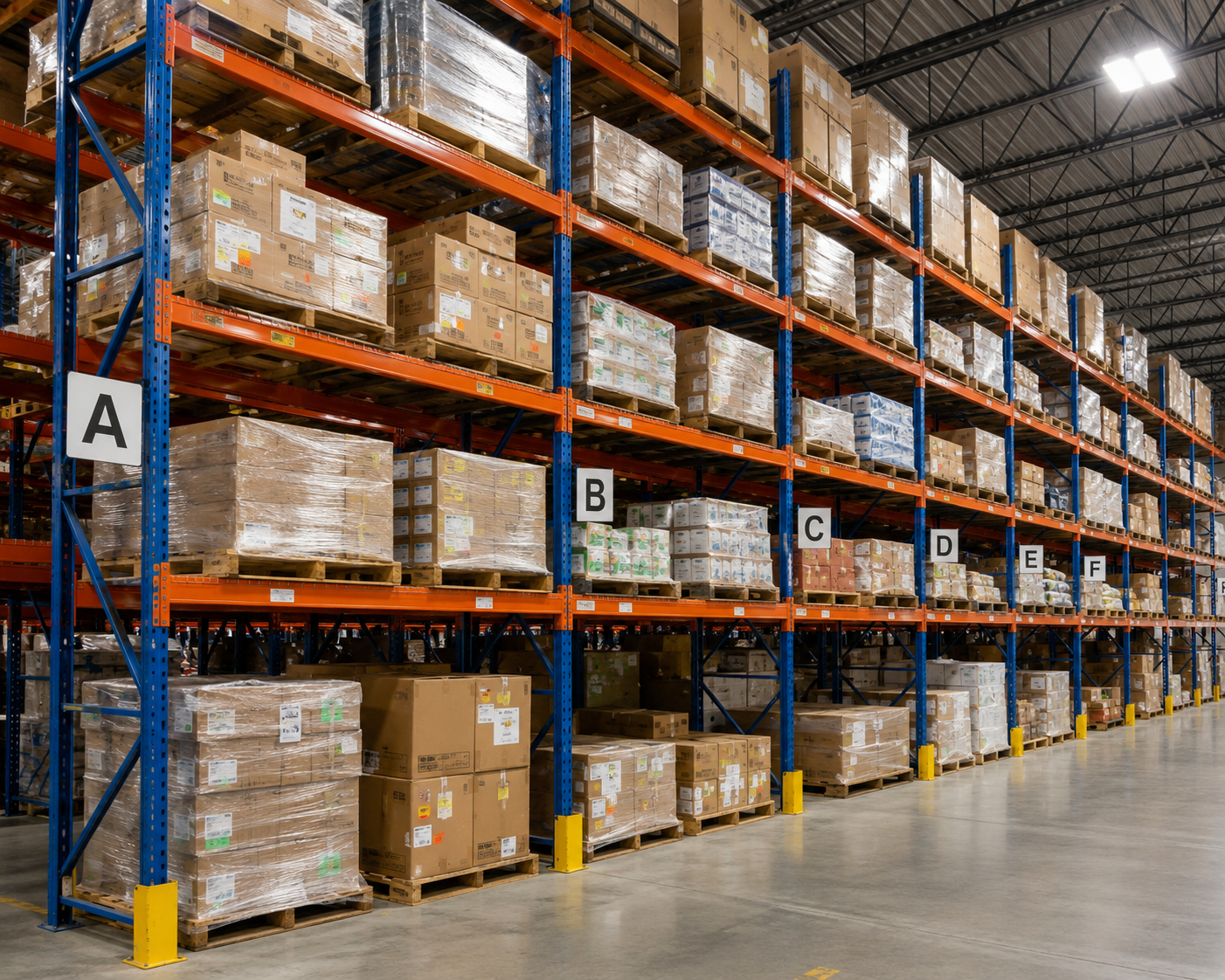
Modern warehouses move faster than ever. With tighter delivery windows, rising inventory levels, and increasing pressure on fulfillment operations, businesses can no longer rely on outdated storage layouts or inefficient warehouse organization. That is why industrial warehouse racks have become one of the most important investments for modern warehouse operations.
A properly designed warehouse rack system does far more than hold pallets. Today’s industrial warehouse racks directly impact inventory flow, material handling efficiency, warehouse safety, storage density, and overall operational performance. Whether a warehouse handles consumer products, automotive parts, food distribution, or industrial materials, the right pallet racking strategy can significantly improve how products move through the facility.
Why Inventory Flow Matters More Than Ever
Inventory flow is the movement of products through a warehouse—from receiving and storage to picking, staging, and shipping. When warehouse storage systems are poorly organized, bottlenecks develop quickly.
Forklifts travel longer distances. Inventory becomes harder to locate. Picking slows down. Product damage increases. Labor costs rise. Even minor inefficiencies inside a warehouse rack system can create major operational problems over time.
This is where modern warehouse racking becomes essential. Well-designed pallet rack systems create organized storage lanes, improve accessibility, and reduce unnecessary movement throughout the warehouse.
Instead of simply storing pallets wherever space is available, strategic pallet racking systems organize inventory based on turnover rates, SKU velocity, pallet dimensions, and workflow patterns.
How Industrial Warehouse Racks Improve Warehouse Organization
One of the biggest advantages of industrial warehouse racks is the ability to create structured warehouse storage zones.
Different types of racking systems allow warehouses to separate inventory by:
- Product category
- Pallet size
- Inventory turnover speed
- Shipping frequency
- Weight and load capacity requirements
This level of organization reduces confusion and helps warehouse teams maintain accurate inventory control.
For example, selective pallet rack systems provide direct access to every pallet location, making them ideal for warehouses with large SKU counts and fast-moving inventory. A selective pallet rack layout improves visibility and reduces the amount of time workers spend locating products.
Meanwhile, high-density systems like pushback rack and drive in rack configurations maximize pallet storage while reducing aisle requirements.
The Role of Pallet Rack Systems in Faster Picking
Picking efficiency is one of the most overlooked benefits of modern industrial pallet racks.
Warehouses that optimize rack placement around picking activity often reduce travel time dramatically. Faster picking improves order accuracy while reducing forklift congestion inside the warehouse.
Systems like pallet flow rack and pallet flow racking are especially effective in high-throughput environments because they use gravity-fed inventory movement. These systems automatically advance pallets forward as products are removed, improving FIFO inventory rotation and reducing manual handling.
Flow rack systems also reduce delays caused by pallet repositioning, helping warehouse teams move products more efficiently during busy fulfillment periods.
Understanding Different Types of Warehouse Racking
Different warehouse operations require different types of racking solutions.
Selective Pallet Rack
Selective racking remains the most common warehouse pallet racking configuration because it provides direct pallet access and flexible storage layouts.
A selective pallet rack system works well for warehouses with diverse inventory and changing SKU requirements.
Pushback Rack
Pushback rack systems increase storage density by storing multiple pallets deep in each lane. These systems help warehouses maximize storage capacity without expanding the building footprint.
Drive In Rack
Drive in rack systems allow forklifts to enter the rack structure directly, making them useful for large quantities of similar inventory.
Cantilever Rack
Cantilever rack and cantilever racking systems are designed for long, bulky materials such as pipe, lumber, or steel products.
Unlike standard pallet rack layouts, cantilever racks use horizontal arms without front columns, allowing easier access to oversized materials.
Pallet Flow Rack
A pallet flow rack system uses gravity rollers and decking systems to move pallets from loading to picking positions automatically.
These systems improve inventory rotation and support high-volume warehouse operations.
Why Rack Components Matter
Many warehouses focus only on rack size or storage capacity, but individual rack components are equally important.
For example, pallet rack uprights determine structural stability and overall load capacity. Choosing the correct upright depth and steel gauge is critical for warehouse safety.
Wire deck and wire decking systems also play a major role in pallet support and fire safety compliance. Proper decking helps distribute pallet weight evenly while reducing the risk of product falls.
Some warehouses also use wire mesh decking to improve airflow, sprinkler penetration, and overall visibility throughout the rack system.
Even smaller components such as pallet rack starter sections, beam connectors, and decking accessories influence long-term warehouse performance.
How Racking Improves Material Handling
Modern material handling equipment operates best when warehouse layouts are organized around efficient pallet movement.
Poorly designed racking layouts create forklift congestion, inconsistent traffic flow, and damaged inventory.
Well-designed warehouse storage systems improve:
- Forklift maneuverability
- Inventory accessibility
- Picking efficiency
- Replenishment speed
- Product visibility
This becomes especially important in warehouses using warehouse automation or semi-automated material handling systems.
As more facilities integrate conveyors, robotics, and automated picking solutions, the warehouse racking system must support efficient product flow throughout the operation.
The Connection Between Storage Density and Operational Efficiency
One common misconception is that maximizing storage density automatically improves warehouse performance.
In reality, the most effective racking solution balances density with accessibility.
For example, a warehouse using industrial storage racks with extremely high density may reduce travel aisles but create slower picking speeds. On the other hand, a selective pallet rack layout may reduce storage density slightly while significantly improving inventory accessibility and labor efficiency.
The best warehouse rack system depends on inventory profiles, pallet turnover rates, SKU count, and operational priorities.
Common Warehouse Storage Mistakes
Many warehouses unknowingly reduce operational efficiency because of poor rack planning.
Some common issues include:
- Incorrect aisle widths
- Inconsistent pallet sizing
- Overloaded rack beams
- Poor pallet flow organization
- Underutilized vertical warehouse space
- Inefficient shelving layouts
- Improper load distribution
Warehouses that invest in engineered warehouse racking systems often uncover significant opportunities to improve organization and storage efficiency.
Beyond Pallet Racking: Integrated Storage Systems
Today’s warehouses rarely rely on a single storage system.
Many facilities combine pallet rack systems with industrial shelving, stack rack systems, shelving zones, and specialized industrial storage rack layouts.
For example:
- Tire rack systems for automotive storage
- Husky rack layouts for heavy inventory
- Industrial shelving for smaller SKUs
- Cantilever racks for oversized products
- Warehouse automation integration for fulfillment operations
Combining multiple warehouse storage systems creates a more flexible and scalable operation.
Why Warehouse Layout Planning Matters
The most effective warehouse racking systems are designed around workflow—not just storage.
Professional warehouse layout planning considers:
- Inventory movement frequency
- Forklift travel patterns
- Receiving and shipping zones
- Material handling equipment access
- Future inventory growth
- Vertical storage opportunities
Warehouses that optimize layout and racking together often improve throughput without increasing labor costs or expanding warehouse space.
The Future of Industrial Warehouse Racks
As warehouses continue evolving, industrial warehouse racks will play an even bigger role in automation, inventory management, and fulfillment efficiency.
Modern racking systems are increasingly designed to support:
- Warehouse automation integration
- Automated picking systems
- Higher storage density
- Faster inventory movement
- Improved warehouse safety
- Better use of vertical storage space
Warehouses that invest in scalable warehouse rack systems today are better positioned for future operational growth.
Final Thoughts
Industrial warehouse racks are far more than simple storage structures. They are the foundation of efficient warehouse operations, organized inventory management, and scalable logistics infrastructure.
From selective pallet rack layouts and pallet flow racking to cantilever rack systems and industrial shelving, the right warehouse racking strategy improves inventory flow, reduces operational inefficiencies, and helps warehouses maximize every square foot of storage space.
As warehouse operations continue growing more complex, businesses that invest in properly engineered pallet racking systems and warehouse storage solutions will gain a significant operational advantage.